The Benefits of Using an Electric Wire Rope Hoist for Heavy Lifting – Stalmac Cranes
Introduction to Electric Wire Rope Hoist
In modern industries, lifting and moving heavy materials safely and efficiently is essential for maintaining productivity and reducing manual effort. An Electric Wire Rope Hoist is a material handling device designed to lift, lower, and position heavy loads using a motor-driven wire rope mechanism. It is widely used in manufacturing plants, warehouses, engineering workshops, construction sites, and industrial facilities where reliable lifting performance is required.
Stalmac Cranes serves the industrial material handling sector, where selecting suitable lifting equipment is important for operational efficiency. Businesses looking for an Electric Wire Rope Hoist Manufacturer in India should consider lifting capacity, lifting height, operating speed, duty classification, safety features, and maintenance requirements before selecting a system.
Compared with manual lifting equipment, an electrically operated hoist can improve handling efficiency and provide controlled load movement when properly selected, installed, and operated. It can also be integrated with overhead cranes, gantry cranes, and other material handling systems according to the application.
What Is an Electric Wire Rope Hoist?
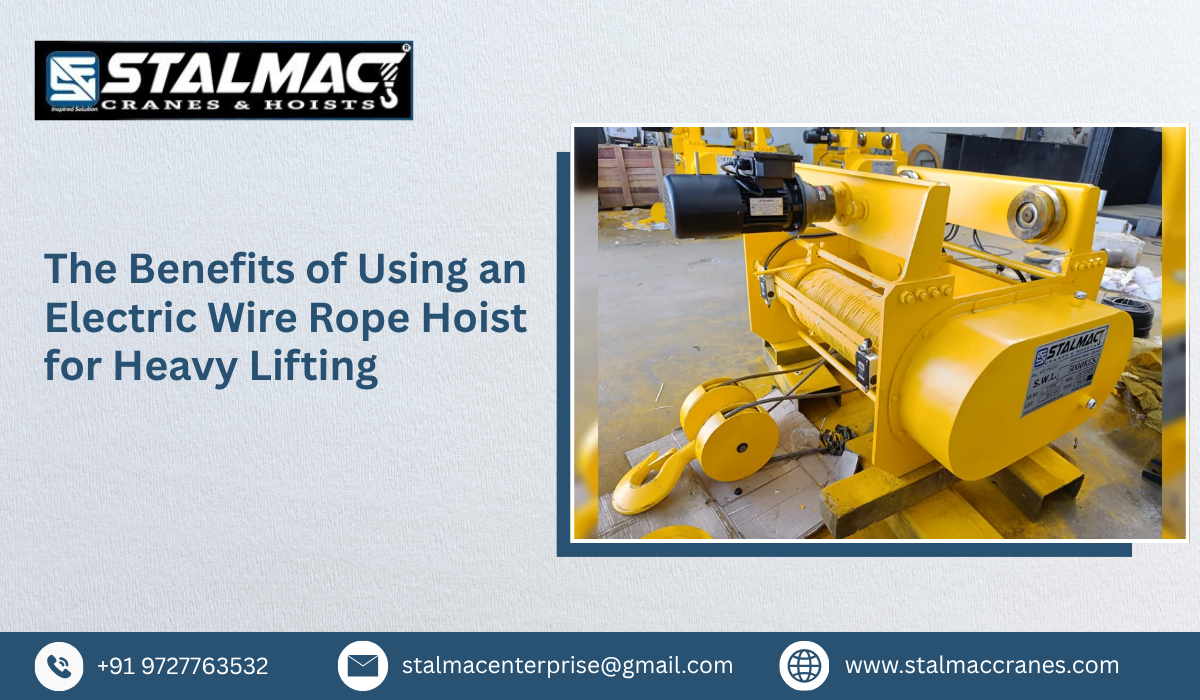
An electric wire rope hoist is a powered lifting mechanism that uses a steel wire rope wound around a grooved drum. An electric motor drives the lifting mechanism through a gearbox, while a braking system helps hold the suspended load when the lifting operation stops. Depending on the design, the hoist may be installed as a fixed unit or mounted on a trolley that travels along a beam.
A typical Industrial Electric Wire Rope Hoist includes the following components:
- Electric Motor: Provides the power required for lifting and lowering loads.
- Wire Rope: Supports the load and transfers lifting force through the reeving arrangement.
- Drum: Stores and guides the wire rope during operation.
- Gearbox: Transmits motor torque at the required speed.
- Brake System: Helps stop movement and hold the load under specified operating conditions.
- Hook Block: Connects the hoist to the load through an appropriate lifting attachment.
- Limit Switches: Restrict travel at designated positions to help prevent over-travel.
- Control System: Allows operators to control lifting, lowering, and trolley movement where provided.
The configuration depends on the required capacity, lifting height, working environment, and operating frequency.
Benefits of Electric Wire Rope Hoist for Heavy Lifting
Understanding the Benefits of Electric Wire Rope Hoist systems helps businesses select suitable equipment for demanding material handling operations.
Advantages of Using an Electric Wire Rope Hoist
- Efficient Heavy Load Handling: Motor-driven lifting enables operators to move substantial loads without relying on manual lifting effort.
- Controlled Lifting and Lowering: Appropriate controls and braking systems support accurate load positioning.
- Improved Productivity: Powered operation can reduce handling time in repetitive industrial lifting tasks.
- Reduced Physical Effort: Operators can manage lifting operations through controls rather than manually raising heavy materials.
- Versatile Installation: Hoists can be installed on suitable overhead beams, bridge cranes, gantry cranes, or fixed lifting points.
- Suitable for Repetitive Operations: Correctly specified equipment can support frequent lifting cycles in manufacturing and warehouse environments.
- Better Workflow Integration: Hoists can be incorporated into production lines and material movement processes.
- Adaptable Configurations: Different capacities, lifting heights, speeds, and control arrangements are available for different operational needs.
These advantages depend on correct equipment selection, structural suitability, regular inspections, and adherence to operating procedures.
Applications of Electric Wire Rope Hoist
An Electric Wire Rope Hoist for Heavy Lifting can serve various industrial applications where loads must be raised and lowered safely.
- Manufacturing Plants: Handling machine components, fabricated parts, dies, and industrial assemblies.
- Engineering Workshops: Lifting heavy workpieces during fabrication, machining, repair, and maintenance.
- Warehouses: Moving heavy goods between storage, loading, and dispatch areas.
- Steel and Metal Industries: Handling steel sections, fabricated structures, and selected heavy components using suitable lifting attachments.
- Automotive Industries: Positioning machinery, engines, and large components during manufacturing and maintenance.
- Construction Projects: Supporting the movement of compatible construction materials and equipment within the hoist's rated capacity and approved configuration.
- Power and Process Industries: Handling heavy equipment during installation, servicing, and replacement operations.
- Crane Systems: Providing lifting functionality in EOT cranes, gantry cranes, and other compatible material handling systems.
The exact application determines the required hoist capacity, duty rating, lifting speed, and control arrangement.
Why Choose a Heavy Duty Wire Rope Hoist?
A Heavy Duty Wire Rope Hoist is designed for applications that demand appropriate lifting performance under frequent or demanding operating conditions. However, heavy-duty suitability must be confirmed through the manufacturer's specifications and the actual operating cycle.
When selecting a hoist, businesses should evaluate:
- Rated Lifting Capacity: The maximum permitted load, including the applicable lifting arrangement and accessories.
- Duty Classification: The expected frequency of operation, load spectrum, and working cycles.
- Lifting Height: The vertical distance required to raise the load.
- Lifting Speed: The speed needed for efficient handling and accurate positioning.
- Rope Reeving: The number and arrangement of rope falls, which affect lifting capacity and speed.
- Operating Environment: Dust, moisture, temperature, and corrosive conditions that may require specific protection.
- Power Supply: Available voltage, frequency, motor configuration, and electrical protection.
- Safety Features: Brakes, limit switches, overload protection where specified, and suitable emergency controls.
A properly selected Electric Wire Rope Hoist helps support consistent lifting operations while reducing the risk of equipment misuse and unnecessary downtime.
How to Select an Electric Wire Rope Hoist Manufacturer in India
Choosing an experienced supplier is important for obtaining equipment that matches the application's technical requirements. An Electric Hoist Manufacturer in India should provide clear information about capacity, lifting height, duty classification, motor specifications, brake arrangement, and installation requirements.
Consider the following factors before purchasing:
- Technical Specifications: Verify that the equipment meets the intended load, operating cycle, and lifting height.
- Manufacturing Quality: Review component quality, fabrication standards, inspection procedures, and available documentation.
- Safety Provisions: Confirm the supplied safety features and understand their operating limitations.
- Installation Support: Establish responsibilities for mounting, electrical connections, testing, and commissioning.
- Maintenance Requirements: Check lubrication schedules, wire rope inspection procedures, brake checks, and spare-part availability.
- Service Support: Discuss troubleshooting, maintenance assistance, and the availability of replacement components.
A dependable Wire Rope Hoist Manufacturer in India should help customers understand the equipment configuration and its suitability for the proposed application.
Businesses comparing an Electric Wire Rope Hoist Supplier in India should also check delivery schedules, product documentation, warranty terms, and the scope of after-sales support.
Electric Wire Rope Hoist Price in India
The Electric Wire Rope Hoist Price in India varies according to several technical and commercial factors. These include rated capacity, lifting height, lifting speed, duty classification, motor power, rope reeving, trolley arrangement, control system, and operating environment.
Additional features, such as variable-frequency drives, radio remote controls, specialised protective coatings, and enhanced environmental protection, may also influence the final price.
When comparing quotations, buyers should review the complete technical specification rather than choosing equipment based on price alone. Installation, commissioning, transportation, maintenance support, and warranty coverage should also be considered when evaluating the total cost of ownership.
For export requirements, an Electric Wire Rope Hoist Exporter in India should be able to clarify applicable electrical specifications, shipping arrangements, documentation, and destination-market requirements.
Maintenance and Safe Operation
Regular maintenance is essential for reliable hoist performance. Operators should inspect the wire rope for broken wires, deformation, corrosion, and other signs of damage in accordance with the manufacturer's instructions. Hooks, brakes, limit switches, controls, and mounting arrangements should also be checked at the prescribed intervals.
Never exceed the rated capacity or lift loads with uncertain weights. Ensure that loads are properly secured, lifting accessories are suitable, and personnel remain clear of suspended loads. Inspection and maintenance should be performed by competent personnel, with the equipment isolated from its power supply whenever required by the procedure.
Why Consider Stalmac Cranes?
Stalmac Cranes operates in the industrial crane and material handling sector. For businesses planning lifting operations, selecting compatible hoisting equipment is an important part of developing an efficient material handling system.
When evaluating an Electric Wire Rope Hoist, consider the required load capacity, lifting height, working conditions, crane configuration, and maintenance expectations. Contact Stalmac Cranes through its official website, stalmaccranes.com, to discuss your industrial lifting requirements and confirm the products and services available for your project.
Frequently Asked Questions (FAQs)
1. What is an Electric Wire Rope Hoist used for?
It is used to lift, lower, and position heavy loads in factories, warehouses, workshops, and other industrial facilities.
2. What is the difference between a wire rope hoist and a chain hoist?
A wire rope hoist uses steel wire rope wound around a drum, while a chain hoist uses a lifting chain. The suitable option depends on load capacity, lifting height, duty requirements, and application.
3. How do I choose the correct hoist capacity?
Determine the maximum load weight, including the lifting accessories, and consider the operating cycle, lifting height, and applicable safety requirements. Never exceed the equipment's rated capacity.
4. How often should an electric wire rope hoist be inspected?
Inspection frequency depends on usage, duty conditions, applicable regulations, and manufacturer recommendations. Frequent-use equipment may require more regular checks.
5. What affects the Electric Wire Rope Hoist Price in India?
Capacity, lifting height, duty classification, speed, motor configuration, controls, trolley arrangement, and additional safety or environmental features affect the price.
Conclusion
An electric wire rope hoist can improve industrial lifting efficiency by providing powered operation, controlled load movement, and integration with suitable crane systems. Selecting the right equipment requires careful consideration of technical specifications, duty requirements, safety provisions, and long-term maintenance.
Stalmac Cranes can be contacted to discuss industrial crane and material handling needs. With proper equipment selection, installation, inspection, and operator training, businesses can establish a lifting solution aligned with their productivity and safety objectives.

